

How To Install Pyvisa On Windows 10

pyVISA on Windows
21 Oct 2019 - fubar - Sreekar Guddeti
 A tutorial on interfacing VISA compatible hardware using python'southward wrapper module `pyVISA`.
Abstruse
Interfacing examination and measurement due south
History of VISA
Requirements
- VISA implementation from National Instruments: NI- VISA
- Keithley USB488A and USB488B GPIB drivers
- PyVISA: Python package that is a frontend to the VISA library
NI- VISA
Download: Permanent
Documentation : Permanent
Documentation: Mirror
Keithley GPIB to USB drivers
488A is older version of the GPIB to USB adaptor. The driver development is supported only till Windows 7. So if trying to install the driver on later Windows versions, it might go tricky
Newer version is 488B
Download KUSB-488B GPIB driver
Download KUSB-488A GPIB driver
Installation
- Remove the previous installation
- Cheque the system is make clean
- Install the Keithley GPIB2USB drivers
- Install the NI-VISA library
- [Digression] Alternative Installation of VISA library
- Install PyVISA
- Install python virtual environment
It is essential to have no traces of previous installations of either the GPIB2USB drivers or the VISA libraries. This is ensured from checking the device manager and installed programs.
In case PyVISA-py is already installed in a virtual surroundings, running
python -m visa infowill list the VISA libraries(either NI's implementation or PyVISA-py'south own pure Python implemenation). This check is optional and needed only if one is not sure if the drivers and VISA libraries are completely uninstalled
Remove the previous installation
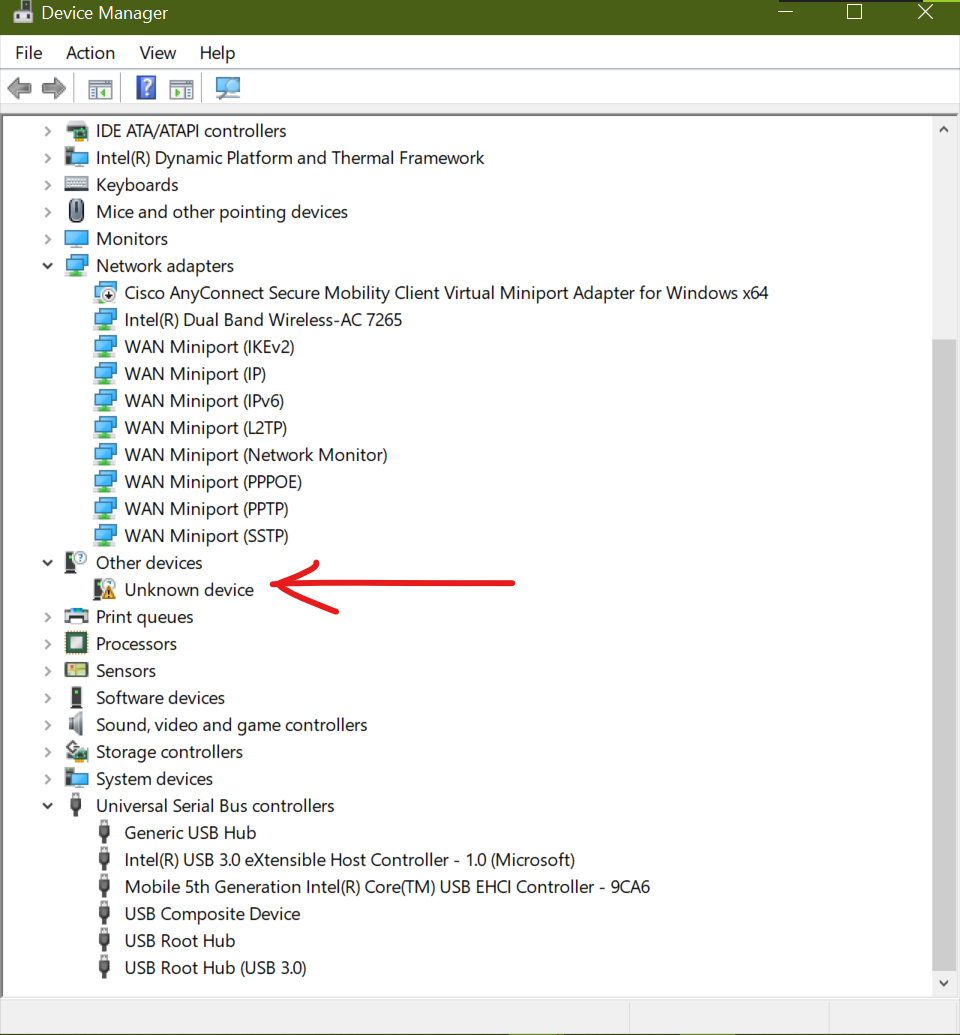
Plug the Keithley GPIB-USB adaptor and check the device director listing. The hardware is not listed.
Check the installed programs. The driver is for KUSB-488B and the hardware is KUSB-USB488A. Hence it is not listed. Unplug the adaptor and remove the installed driver.

Check the system is make clean
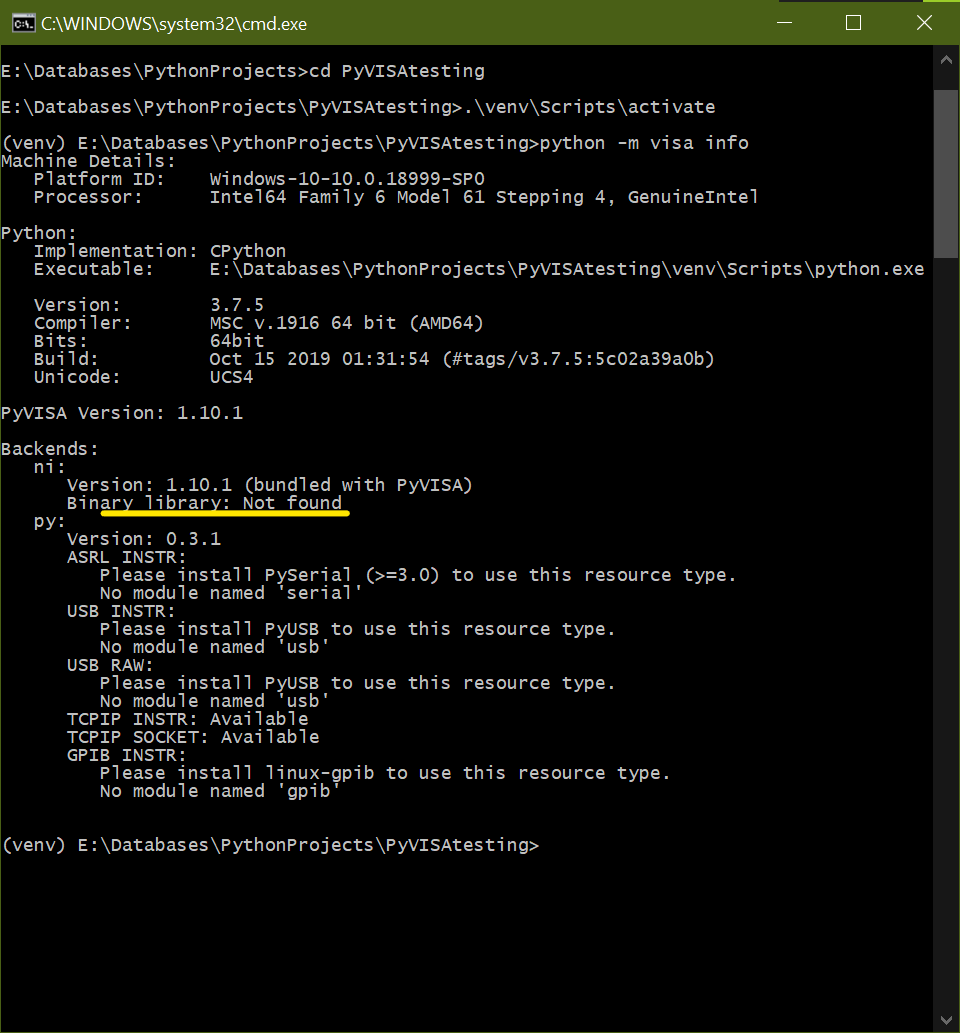
Run ` python -m visa info` and see if the sytem is clean and ready for proper installation
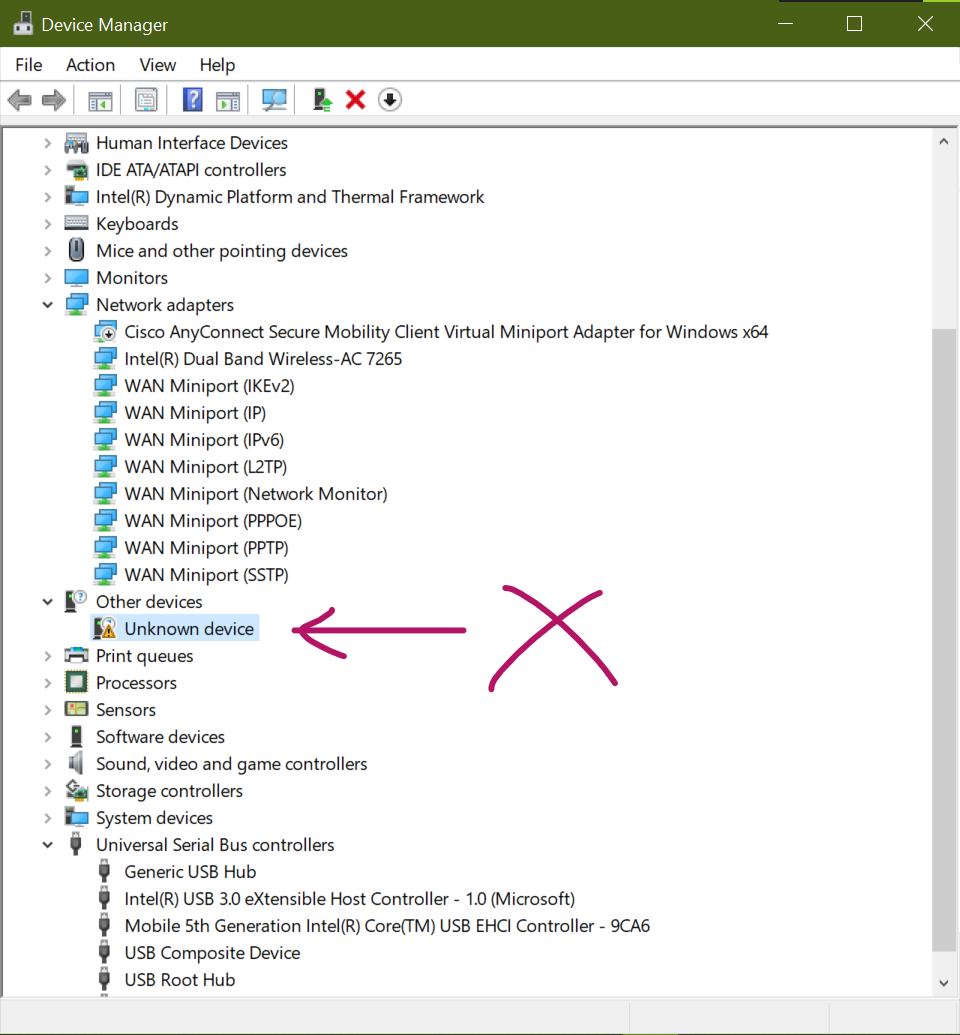
Again plug the the Keithley GPIB-USB adaptor and check the device manager list. This confirms that the system is ready for a proper installation of hardware.
Install the Keithley GPIB2USB drivers
Ensure the hardware is unplugged
Install the KUSB-488A driver with version 9.2.0. According to the release notes within the source directory,
it is recommended to install the Keithley's adaptor commuter starting time followed by the NI'southward ain GPIB-488.two commuter to avoid vendor pattern conflict.
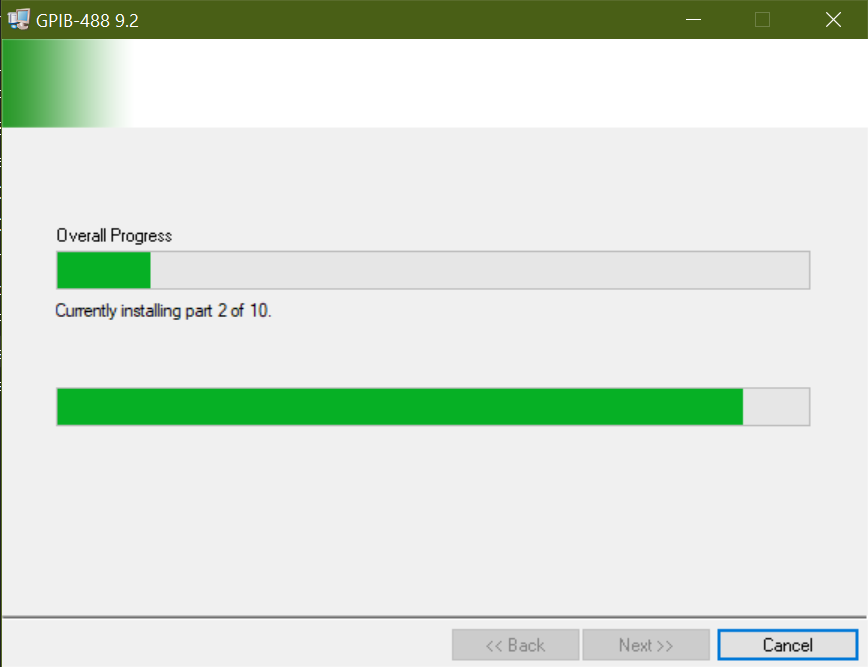
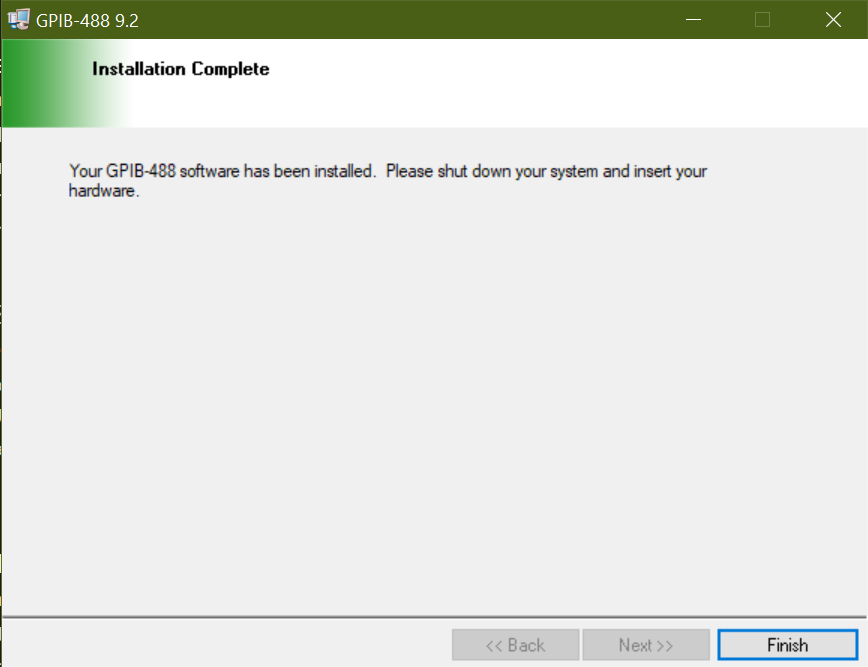
Rebooting the computer is a requirement after the completion of installations
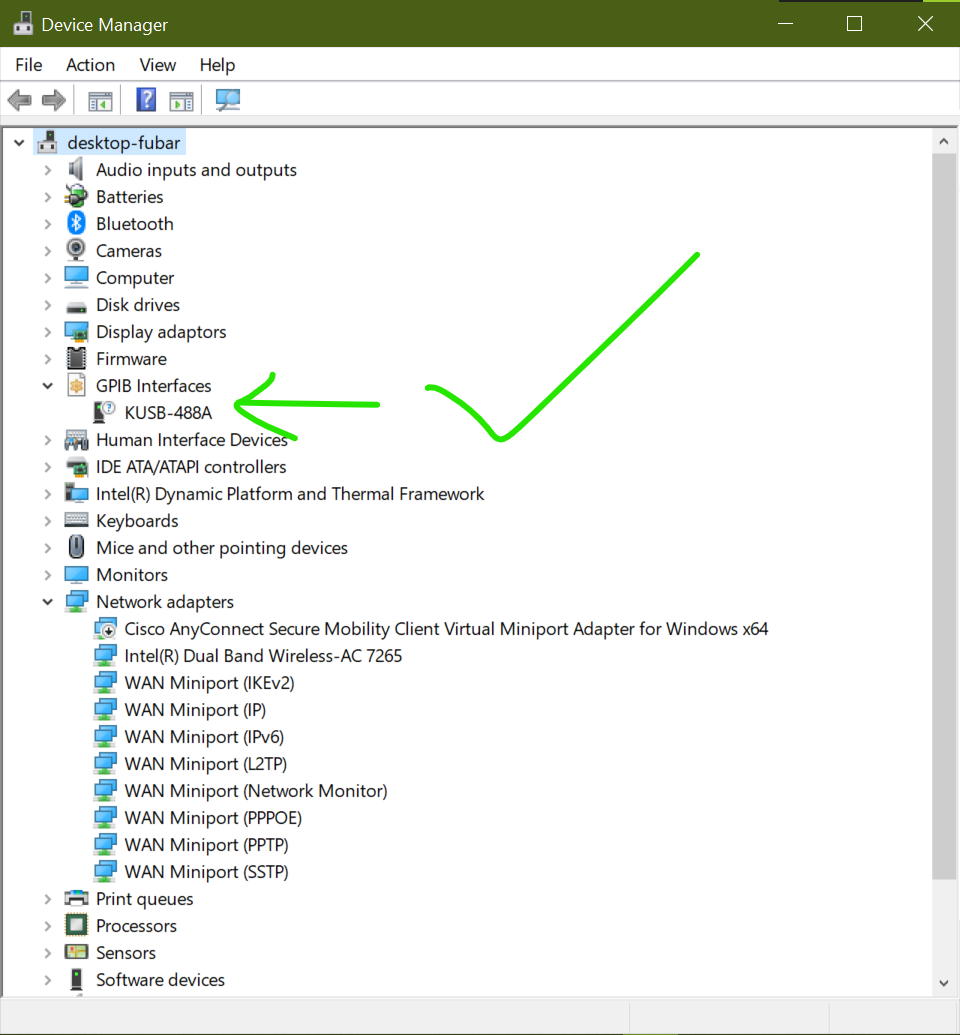
After reboot, plug the hardware and cheque if it is installed in the device manager
Install the NI-VISA library
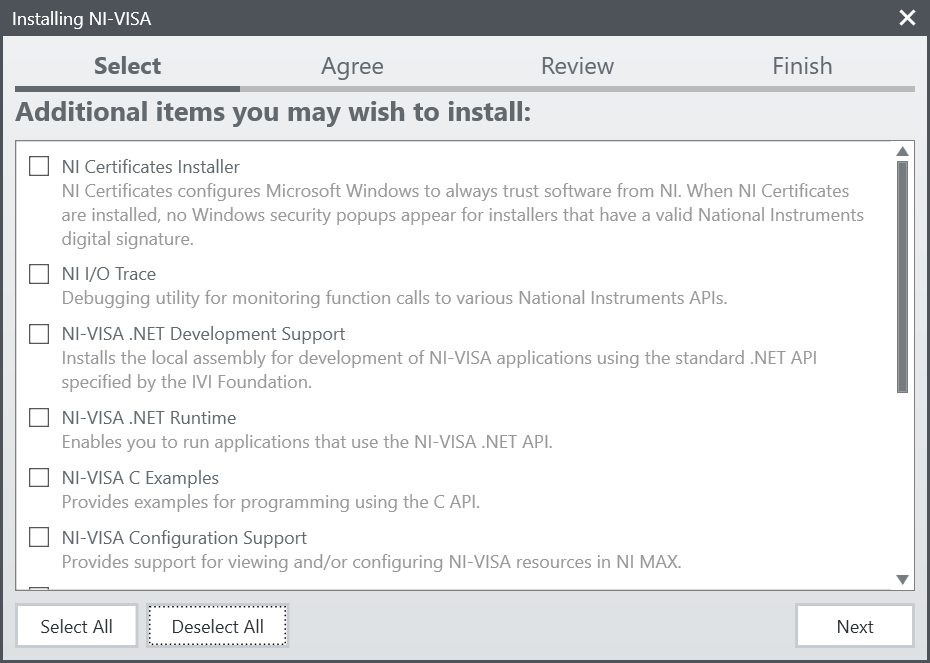
Install the NI'southward implementation of the VISA specification; version 19.0
Uncheck the boosted services provided by NI equally these will only increment the number of unneccessary processes and services running in the groundwork. In the older versions of NI-VISA, the option to uncheck GPIB-488.2 driver from NI was nowadays in the installer. However the current version automatically checks for the GPIB commuter pre-installed and accordingly proceeds with the installation to avoid conflict.
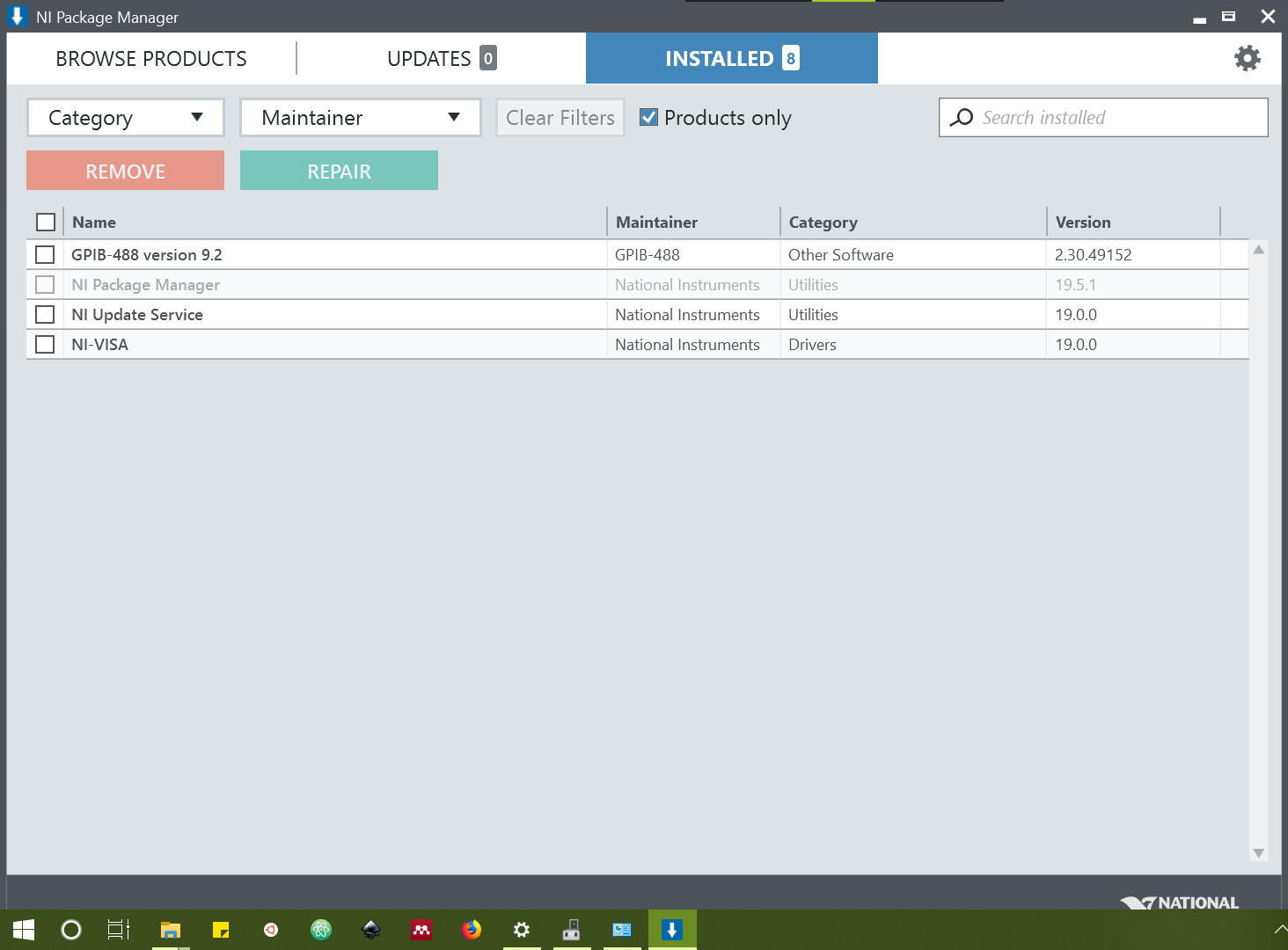
Subsequently installation, check for the installed components. Check that the GPIB driver is from Maintainer GPIB-488 whereas NI-VISA is from NI itself.
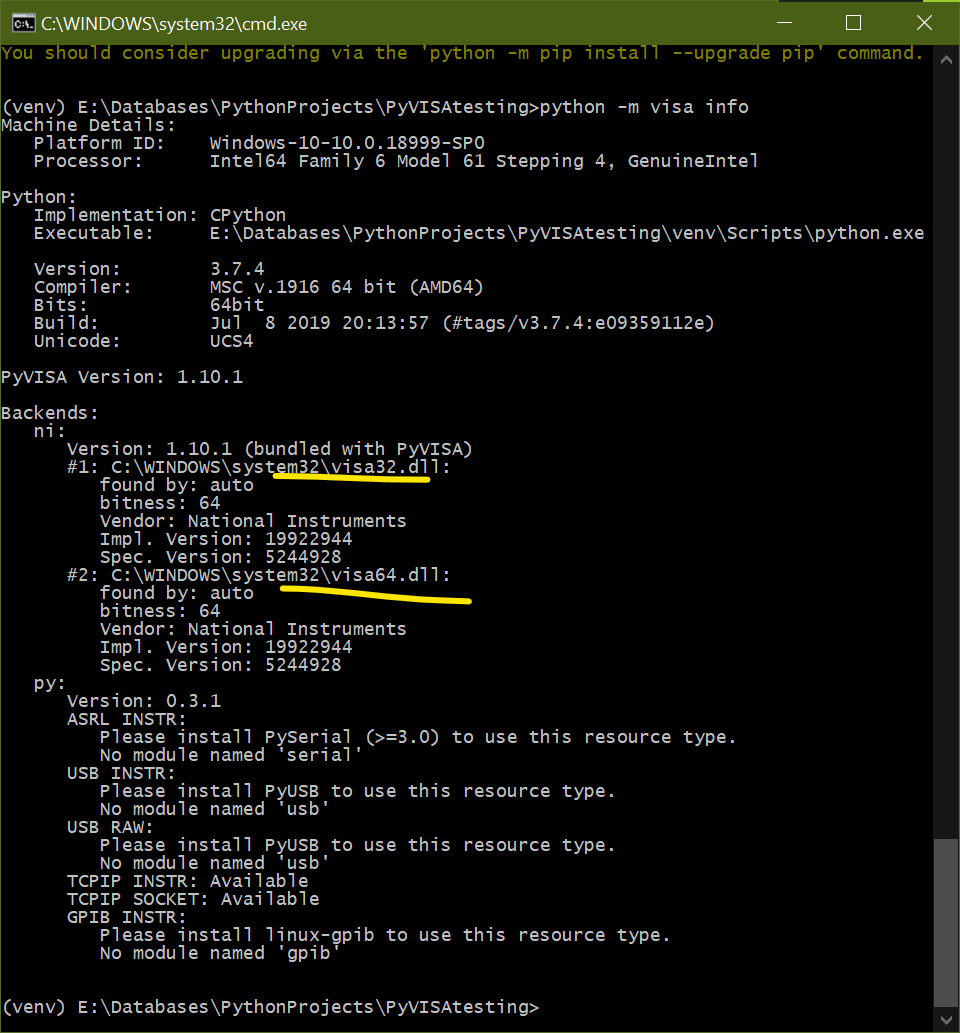
A successful installation creates visa32.dll and visa64.dll dynamically linked libraries. DLL files are shareable libraries which can be ported as it is across systems offer convience of using software without recompiling on new systems. They human action like patches.
After the installation, expect out for the install location; usually the C:\\Windows\system32 and search for visa32.dll and visa64.dll. If they are present there, then PyVISA-py tin can detect them without fuss. If they are not present there (for some reason), then continue to the alternative installation
[Digression] Culling Installation of VISA library
For some reason, my VISA installation has not generated the DLLs at the location. I searched for visa* (* is called a wild card evaluating to any character set like 32.dll or 64.dll) across the WINDOWS directory and found a visa32.dll at C:\Windows\SysWOW64\visa32.dll.
To demonstrate the portability of DLL files, I copied the visa32.dll to the PyVISA virtual environment (described below) and checked for the detection of the visa library.
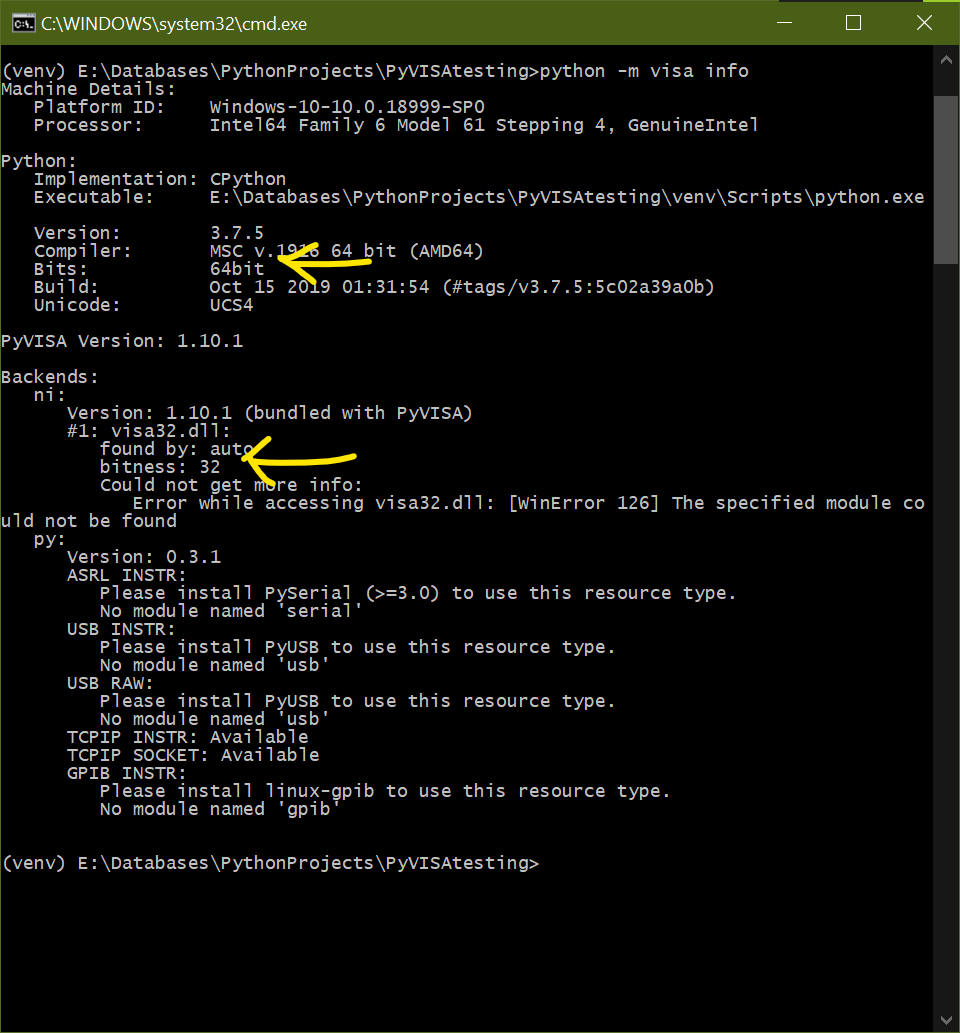
python -m visa info lists the detection of the visa32 library at the path of the virtual surroundings.
Still the bitness of Python installation (64 scrap) and that of VISA (32bit) do non match. We need to gear up this!
Create a virtual environment
Tools available with united states of america:
32 bit VISAcd
Source: https://baalkikhaal.github.io/2019/10/21/Interface-VISA-hardware-with-Windows-using-Python.html
Posted by: parkesancence.blogspot.com
0 Response to "How To Install Pyvisa On Windows 10"
Post a Comment